
Viewing: Notes » Strong.
Strong.
(4 minute read.)
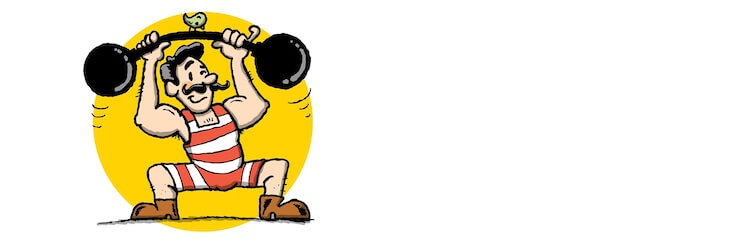
'We're not ok?'
I'm open and unabashed in my view about how much of 'business culture' is detrimental to the health of entrepreneurs/leaders/business owners.
And so, with that firmly in mind, here's a straight and unbuttoned essay… confessional, impatient with polite lies, allergic to productivity theatre, and unimpressed by entrepreneurs pretending to be granite statues.
Much of what's below applies to leaders and business owners as well as entrepreneurs.
The Great Pretence of Being Fine.
There's a peculiar madness at the heart of modern enterprise, and it is not failure. It is not risk. It is not even money.
It is the insistence that we are fine.
The entrepreneur—this modern saint of hustle and spreadsheets—is expected to be tireless, buoyant, immune. He must wake smiling, sleep dreaming in KPIs, and greet disaster with a LinkedIn post and a brand-consistent grin.
He must not wobble. He must not confess. He must not say, plainly and without metaphor, I am not well.
This is absurd. Worse: it is corrosive.
We have built a culture where emotional difficulty is treated like a cracked phone screen—acknowledged only if it becomes impossible to ignore.
Anxiety is reframed as 'drive'. Depression is rebranded as 'deep thinking'. Burnout is worn like a medal, a bloodstain on the shirt that proves you were in the fight.
But let's stop pretending.
The fight is not noble. It is often boring, lonely, repetitive, and sometimes quietly terrifying.
Entrepreneurs, in particular, live inside a pressure cooker of their own design. No HR department. No soft landing. No one to say 'You've done enough for today.' The idea is you. When it falters, you falter. When it stalls, your identity goes with it. That's not resilience—that's exposure.
And yet we maintain the charade.
We sit in cafés, tapping at laptops like holy instruments, nodding gravely as if we are generals rather than frightened animals hoping the next invoice clears. We speak in jargon to avoid speaking in truth. We say 'strategic pause' instead of 'I'm exhausted.' We say 'pivot' instead of 'I don't know what the hell I'm doing anymore.'
Why?
Because somewhere along the line we decided that honesty was bad for business.
This is nonsense.
Honesty is bad for posturing. It is disastrous for bullshit. But for actual human work—work done by nervous systems and fragile minds—it is oxygen.
Imagine, just for a moment, a world where an entrepreneur could say:
'I'm anxious most mornings.'
'I don't trust my confidence—it comes and goes.'
'I built this company during a period when I was barely holding myself together.'Not as a confession. Not as a brand story. Just as fact.
What would happen?
The myth would crack. The ridiculous pedestal would wobble. And something better—something sturdier—might replace it: competence without theatre, ambition without self-mutilation, success without the lie of invincibility.
Entrepreneuring today is drowning in respectability. Everyone wants to look composed. Everyone wants to be a 'thought leader.' Nobody wants to admit they sometimes lie on the floor staring at the ceiling, wondering whether this whole enterprise—this company, this identity—was a colossal mistake.
But those moments are not weakness. They are the unpaid invoices of being alive.
If we could speak openly about mental and emotional difficulty—not as drama, not as content, but as reality—we might finally stop confusing endurance with worth. We might build companies that don't require their founders to quietly disintegrate in order to survive.
And maybe, just maybe, we'd discover that the strongest thing an entrepreneur can say is not 'I've got this…', but 'I'm struggling, and I'm still here'.
That would be progress.
Messy, human, unmonetisable progress.
Which is the only kind that ever mattered anyway.It doesn't require great intelligence to be able understand this. We should recognise that pretending to 'have it all together' while struggling is a sure way to lose sanity and soul. We should reject respectability where it demands silence when speech is needed most.
Let's close with some music…
The song explores the internal conflict of appearing resilient ('I might seem so strong') while feeling vulnerable and lost ('caught in the middle'), questioning whether true strength lies in emotional openness or stoicism, using metaphors like a roaring lion and crying child to highlight the need for empathy and understanding, even when we're scared to show weakness.
The lyrics convey a sense of introspection and a struggle to reconcile outward strength with inner fragility, prompting reflection on whether we're strong enough to accept vulnerability in ourselves and others.
Never miss a Note… get updates by email or rss.